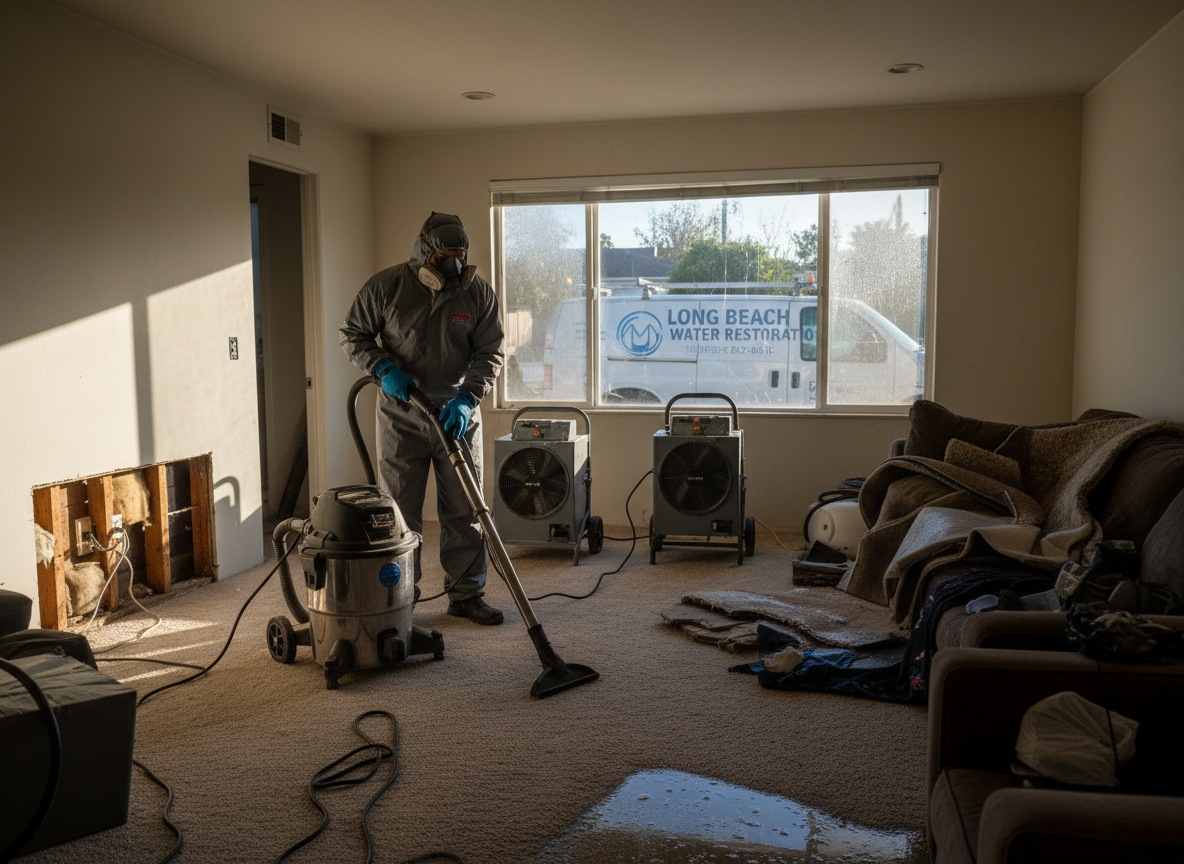
Paramount sits just east of Long Beach with many 1950s and 1960s single-family homes on smaller lots along Rosecrans Avenue and Paramount Boulevard. These properties often have original cast-iron plumbing and flat roofs that leak during winter rains. When water enters walls or subfloors, crews from Long Beach Water Damage Restoration pros reach the area quickly via the 605 and 91 freeways to extract water before mold sets in the mild ocean-moderated air.
The neighborhood borders the Los Angeles River channel and sits near the Long Beach city line, so runoff from Signal Hill slopes can push water into backyards and garages after storms. Technicians focus on hidden moisture behind stucco and in crawl spaces common to Paramount housing stock. They use targeted drying under local humidity levels instead of broad dehumidification that works farther inland.
Service calls also cover nearby Lakewood and Carson edges where townhomes share walls, letting water travel between units. The team coordinates with local property managers to limit disruption on busy streets like Somerset Boulevard while keeping equipment off driveways during the day.
Around 23. Paramount
We regularly work near:
- 📍Paramount Park
- 📍Paramount High School
- 📍Paramount City Hall
- 📍Rosecrans Avenue
- 📍Somerset Boulevard
Water Damage Restoration in 23. Paramount — Local Notes
- •1950s-1960s homes along Paramount Boulevard often have slab foundations where pipe leaks travel under concrete, requiring slab-edge detection before drying.
- •Winter rains combined with shallow lots near the river channel create backyard ponding that soaks garage slabs and requires subfloor moisture mapping.
- •Narrow driveways and street parking on Rosecrans force equipment staging in front yards, so crews use compact extractors to avoid blocking traffic.
- •Proximity to the Port of Long Beach keeps relative humidity higher year-round, extending drying times by one to two days compared with inland Los Angeles County spots.