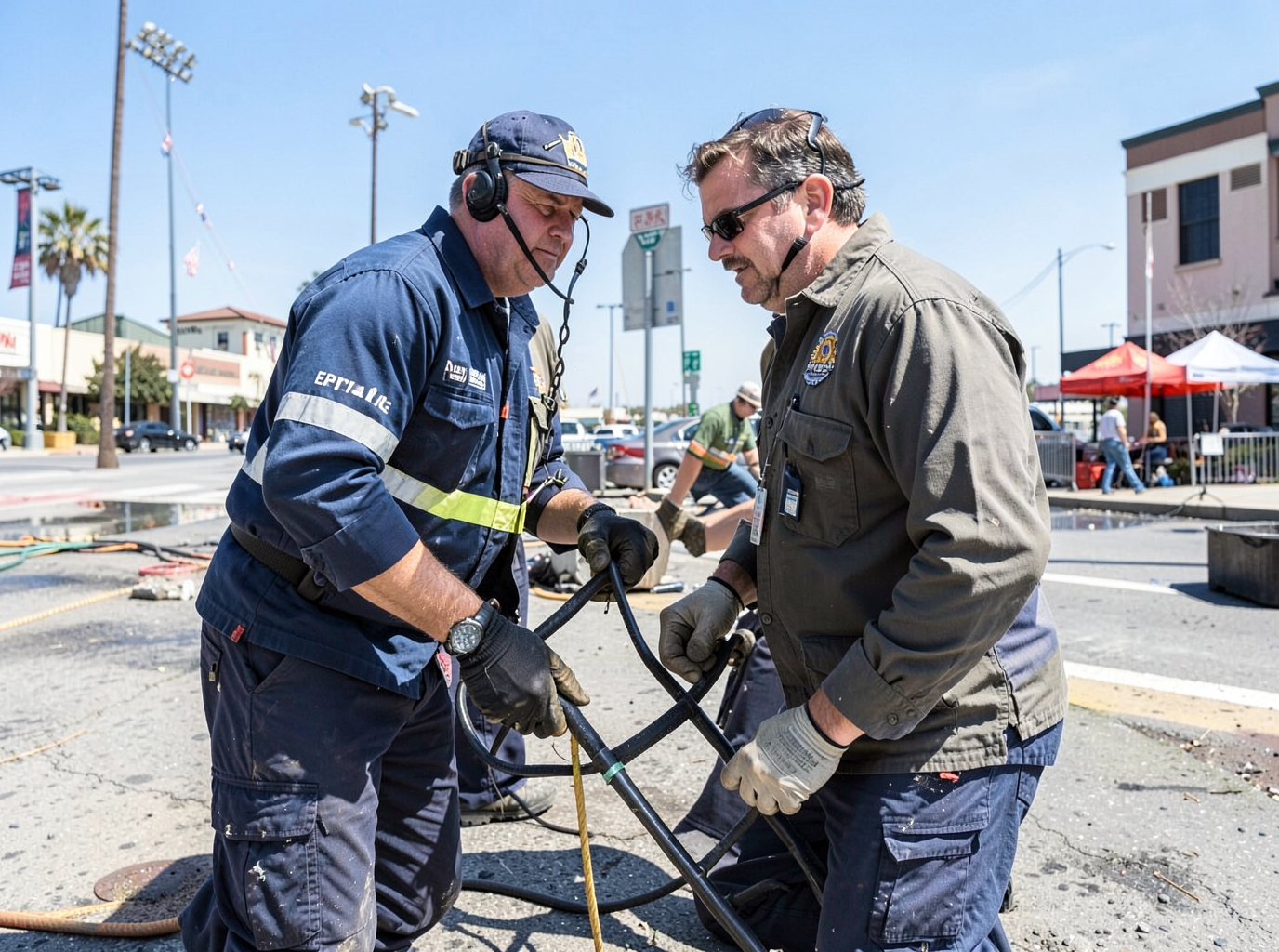
Long Beach homes built before 1970, especially in Belmont Shore and Naples, often feature plaster walls over wood lath and raised foundations that let water travel far before surfacing. Emergency water removal here requires immediate extraction from both visible floors and hidden cavities to avoid hidden mold growth encouraged by the ocean-moderated humidity. Crews use truck-mounted pumps and moisture meters calibrated for the area's silty soils that slow natural drainage near the Port of Long Beach.
Signal Hill and Carson border properties sit on slightly higher ground but still face runoff from winter storms that collect against older concrete slabs. Technicians focus first on removing standing water within the first hour, then place air movers and dehumidifiers sized for the mild Mediterranean temperatures that keep evaporation slower than inland Los Angeles County spots. This prevents secondary damage to hardwood floors common in 1950s Lakewood-adjacent homes.
Near Long Beach City Hall and the Queen Mary waterfront, commercial spaces with below-grade storage need subfloor drying that accounts for tidal influence on groundwater. Extraction plans always include checking adjacent units because shared walls in multi-family buildings allow water to migrate quickly across property lines.
After initial removal, crews document moisture levels at multiple depths in drywall and concrete so restoration meets Los Angeles County habitability standards before any rebuilding begins.
Technician insight
In Long Beach the thing that catches most people out with Emergency Water Removal is how 1940s–1960s stucco homes in Belmont Shore hold water behind plaster for weeks because the mild ocean air never drops low enough to pull moisture out naturally.
Naples canal-adjacent home after storm runoff
Water entered a 1952 raised-foundation house in Naples after heavy rain overwhelmed backyard grading. Extraction revealed water had wicked into subfloor joists and traveled under the kitchen slab toward the neighboring property. Crews pumped the crawl space, placed targeted drying under the slab, and confirmed moisture levels daily until readings matched unaffected rooms.
Emergency Water Removal Services We Offer
✓Standing Water Extraction
Truck-mounted pumps remove bulk water from floors and yards in Downtown Long Beach and Naples within the first hour of arrival.
✓Crawl Space Water Removal
Targeted pumping and drying in raised-foundation homes common in Belmont Shore where ocean humidity slows evaporation.
✓Slab Leak Water Extraction
Immediate removal under concrete slabs in Signal Hill and Carson properties before water migrates to neighboring units.
✓Basement Flood Cleanup
Extraction and moisture mapping for below-grade spaces near the Port of Long Beach affected by storm runoff.
✓Multi-Unit Water Migration Control
Containment and extraction across shared walls in older apartment buildings around Long Beach City Hall.
Emergency Water Removal Cost in Long Beach, CA
| Service | Typical Range | What Affects It |
|---|---|---|
| Single-room extraction | $450–$850 | Higher in older plaster homes with hidden wall moisture |
| Crawl space or basement | $900–$1,800 | Increases with tidal groundwater near the port |
| Whole-home water removal | $2,200–$4,500 | Common in multi-unit buildings with migration across units |
| Equipment monitoring per day | $150–$300 | Longer in mild ocean humidity that slows drying |
Ranges are typical for Long Beach, CA and confirmed with an exact written quote before any work starts.
How it works
- 1
Arrival and Safety Check
Technicians arrive at the Long Beach address, shut off water sources, and assess electrical risks before starting extraction.
- 2
Bulk Water Removal
Pumps and wet vacuums extract standing water from floors, yards, and crawl spaces while documenting affected square footage.
- 3
Hidden Moisture Detection
Moisture meters locate water behind plaster walls and under slabs typical in Belmont Shore and Naples homes.
- 4
Drying Equipment Placement
Air movers and dehumidifiers sized for local humidity are positioned; daily monitoring continues until readings stabilize.
- 5
Final Documentation
Moisture logs and photos are provided for insurance and to confirm the property meets Los Angeles County standards.
Pricing
Upfront quotes after inspection; final cost depends on water volume, affected square footage and hidden moisture extent.