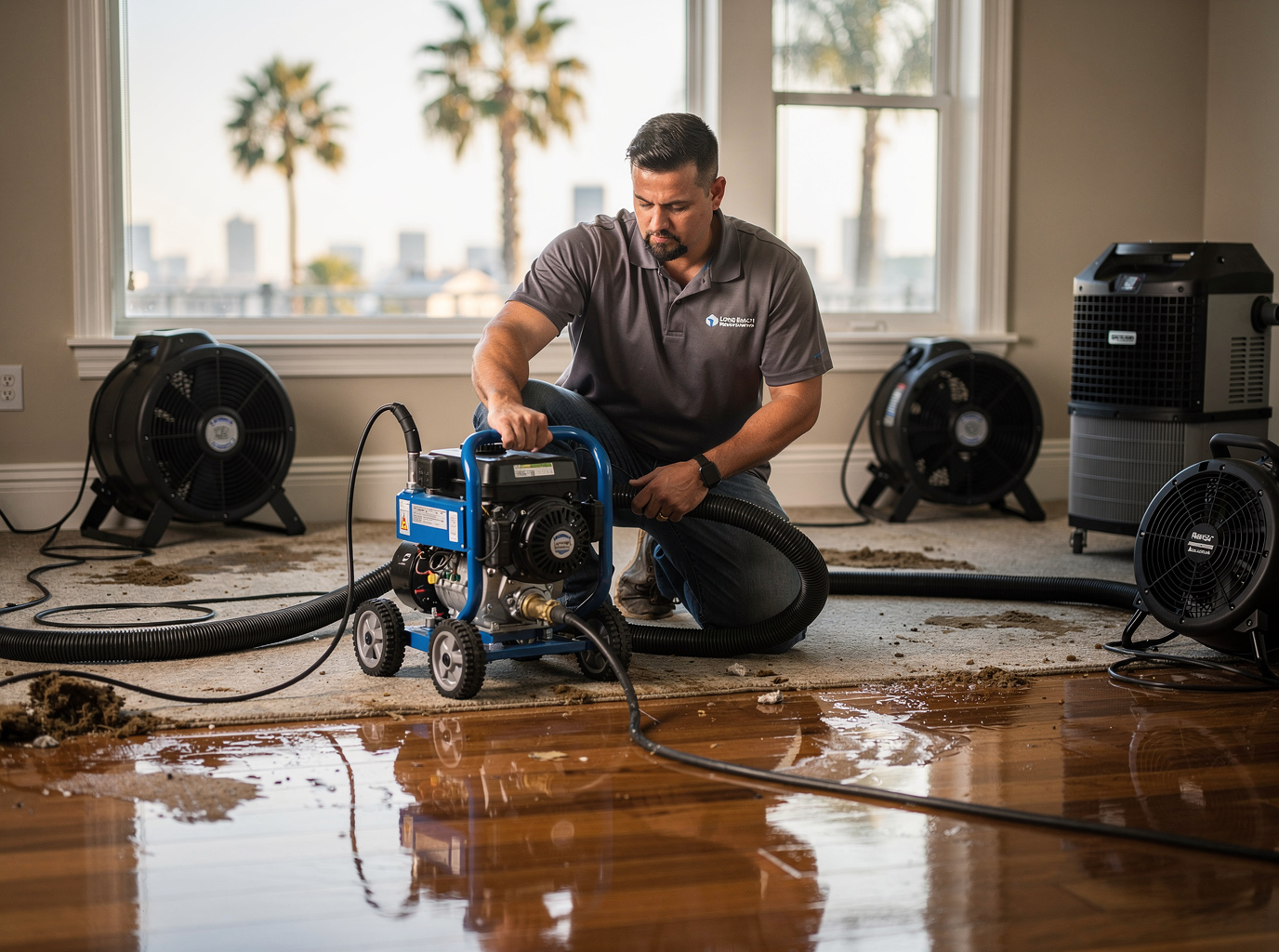
Long Beach homes built before 1960 in neighborhoods like Belmont Shore and Naples often have galvanized or cast-iron supply lines that corrode from decades of exposure to the mild but persistently humid Mediterranean air coming off the Pacific. When these lines fail, water migrates through plaster-and-lath walls and into the raised floor cavities common in Signal Hill bungalows, creating hidden pockets that standard fans miss. Technicians working from the 5199 Pacific Coast Hwy base carry moisture meters calibrated for salt-laden coastal air because residual salinity accelerates mold on wood framing within 48 hours even after visible water is gone.
Repair work here routinely involves removing sections of tongue-and-groove hardwood floors without disturbing the original subfloor nails that can telegraph through new finishes. In multi-unit buildings near the Port of Long Beach, technicians must coordinate with Los Angeles County building inspectors because water that reaches shared walls triggers fire-rated assembly requirements. Extraction equipment is sized for the tight alley access typical of Downtown Long Beach lots, and drying times are extended when marine layer fog keeps outdoor humidity above 70 percent for consecutive days.
After extraction, crews replace saturated insulation in exterior walls with closed-cell foam rated for coastal corrosion rather than standard fiberglass, which holds moisture longer in this climate. Final verification includes thermal imaging of ceiling joists in two-story homes where water from upper bathrooms has traveled along copper lines to lower living spaces.
Technician insight
In Long Beach the thing that catches most people out with Water Damage Repair is how quickly salt air in the marine layer keeps wall cavities above 60 percent moisture even after extraction, especially in Belmont Shore homes with original plaster that traps humidity longer than newer drywall.
Naples Canal Home Pipe Leak
A homeowner in Naples noticed water staining on the living-room ceiling below a second-floor bathroom. Inspection revealed a pinhole leak in a 1950s galvanized line that had traveled along floor joists into the exterior wall. Crews extracted water, dried the cavities for four days to overcome persistent marine humidity, then replaced the affected plaster and insulation with corrosion-resistant materials.
Water Damage Repair Services We Offer
✓Pipe Burst Restoration
Isolate and replace failed supply lines in pre-1960 homes, then restore drywall and flooring in affected rooms of Belmont Shore and Naples properties.
✓Ceiling Leak Repair
Locate roof or plumbing leaks above living spaces common in multi-story Long Beach apartments, remove damaged plaster, and reinstall with proper vapor barriers.
✓Flooded Carpet Restoration
Lift and dry wall-to-wall carpet in ground-floor units near the Los Angeles River channel after heavy winter rains, followed by antimicrobial treatment.
✓Drywall Water Damage Repair
Cut out saturated drywall in older lath-and-plaster walls, treat framing for coastal humidity, and match original textures in Signal Hill and Downtown homes.
✓Appliance Leak Cleanup
Address overflows from refrigerators, washers, and water heaters that pool under cabinets in tight Long Beach kitchens, then restore subfloors and base cabinets.
Water Damage Repair Cost in Long Beach, CA
| Service | Typical Range | What Affects It |
|---|---|---|
| Initial Moisture Assessment | $175–$275 | Includes meter readings in multiple rooms and written scope for Long Beach addresses. |
| Water Extraction | $450–$900 | Varies with volume and whether alley access limits equipment size. |
| Drying Equipment Rental | $65–$120 per day | Daily rate for air movers and dehumidifiers; marine humidity often extends run time. |
| Drywall and Insulation Replacement | $2.75–$4.50 per sq ft | Includes removal, disposal, and coastal-rated materials for older homes. |
Ranges are typical for Long Beach, CA and confirmed with an exact written quote before any work starts.
How it works
- 1
On-Site Assessment
Technician arrives from the Pacific Coast Hwy location and maps moisture with meters in every affected room, noting construction type and any prior repairs visible in older Long Beach stock.
- 2
Water Extraction
Remove standing water using truck-mounted equipment sized for alley access, then pull baseboards to expose wall cavities in homes with raised foundations.
- 3
Drying and Monitoring
Place air movers and dehumidifiers calibrated for marine-layer humidity, returning daily to check readings until materials reach pre-loss moisture levels.
- 4
Structural Repair
Replace damaged drywall, insulation, and flooring with materials suited to coastal conditions, then coordinate final walkthrough with the homeowner.
Pricing
Upfront written quotes provided after inspection; final cost depends on square footage, depth of water migration, and whether original plaster or hardwood must be matched.