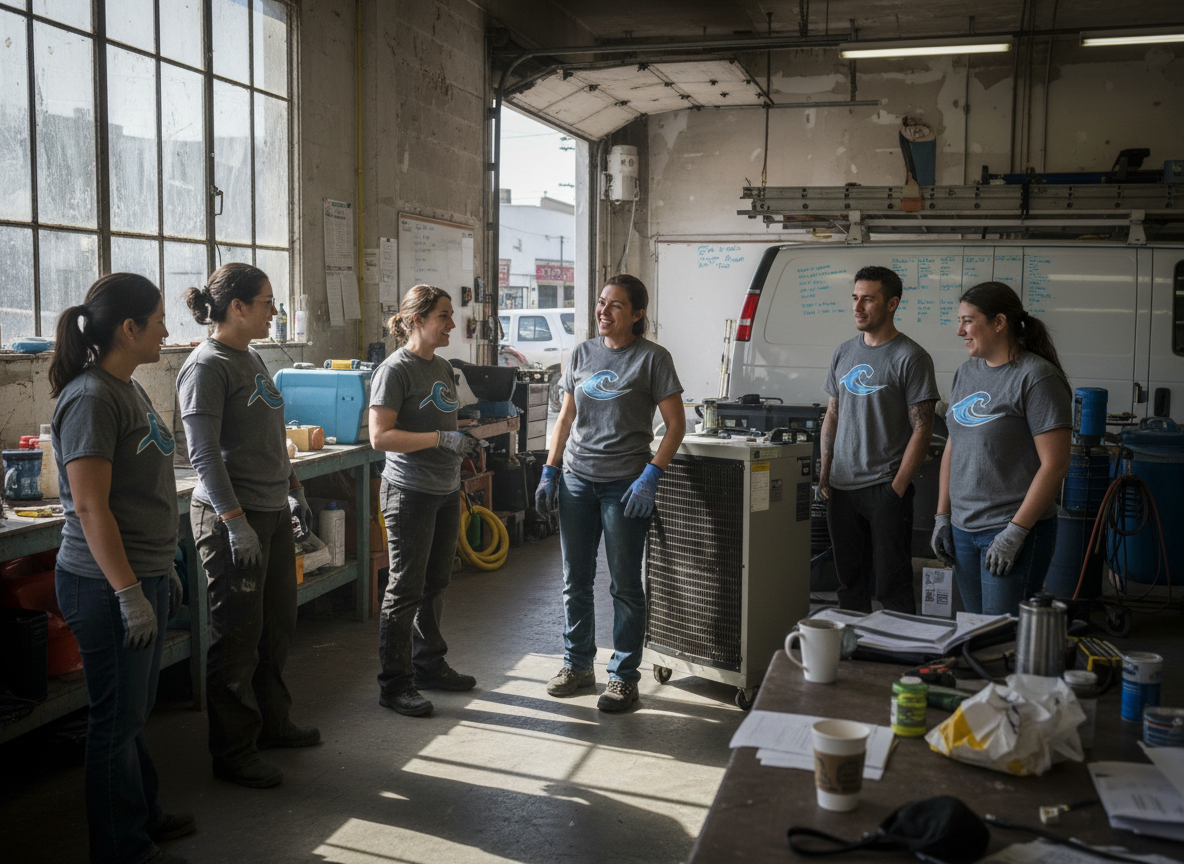
Homes in the Costa Mesa section of Long Beach sit close to Pacific Coast Highway and face steady moisture from the ocean-moderated Mediterranean climate. Older single-family houses and small apartment buildings here often have original plumbing that leaks under floors or behind walls once winter rains arrive. Our crew at 5199 Pacific Coast Hwy responds directly to these blocks, extracting water before it reaches nearby Signal Hill slopes or spreads into Belmont Shore.
Access in this pocket is tight because many lots back up to alleys or narrow driveways off streets feeding Pacific Coast Highway. We stage equipment on the curb and move dehumidifiers inside quickly so residents along the corridor do not lose more than a day or two. The same ocean air that keeps summers mild also slows drying, so we run extra air movers and check moisture readings twice daily until levels match the surrounding dry soil.
When a pipe bursts or a roof leak hits during the short rainy season, water travels fast through the raised foundations common in this tract. We cut and remove saturated drywall the same afternoon, then treat subfloors to stop mold in the mild temperatures that never fully halt growth.
Around 44. Costa Mesa
We regularly work near:
- 📍Pacific Coast Highway
- 📍Costa Mesa Park
- 📍Signal Hill border at Cherry Avenue
- 📍Long Beach City College south edge
Water Damage Restoration in 44. Costa Mesa — Local Notes
- •Many Costa Mesa tract homes built before 1960 have cast-iron drains that crack where they meet the curb line along Pacific Coast Highway.
- •Narrow lots and rear-alley access mean our vans park on the street; we carry equipment by hand to back units so we do not block neighbors.
- •Ocean humidity lingers longer here than inland, requiring extended drying times even after extraction on jobs near the highway corridor.
- •Storm drains along the east side of the neighborhood back up during heavy winter rain because the slight grade toward Signal Hill funnels water into the same low spots.