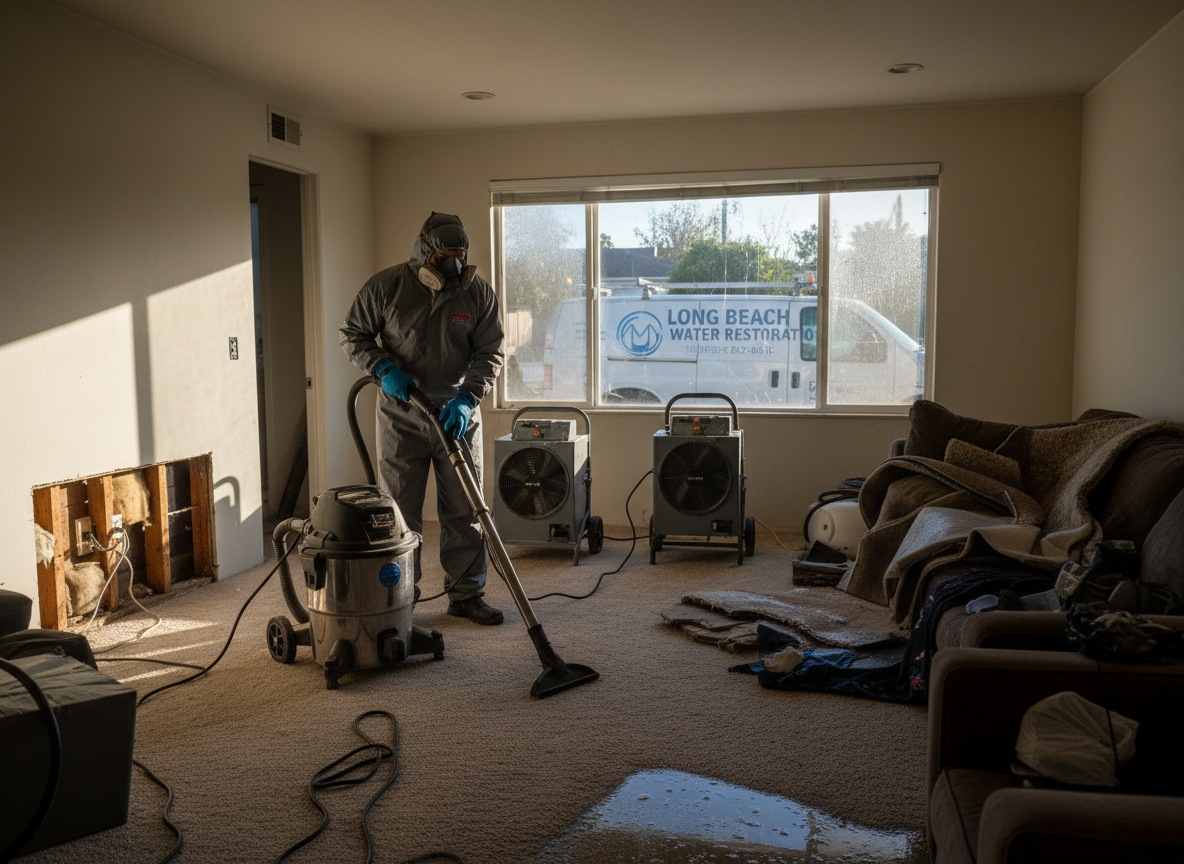
Homes in 45. Newport Beach sit close to the water with direct exposure to salt air and occasional storm runoff from the bay. Older single-story bungalows and mid-century builds along streets like Newport Avenue and 39th Street often have crawl spaces and original plaster that trap moisture after leaks or flooding. Our crew reaches these addresses quickly from the Pacific Coast Hwy location to extract water before it migrates into shared walls common in this pocket of Long Beach.
Ocean-moderated weather keeps temperatures mild but raises humidity levels that slow natural drying in 45. Newport Beach. Properties near the edge of Belmont Shore and Naples see more frequent appliance and roof leaks because of the dense layout and older plumbing runs. We stage equipment on narrow lots and side streets, using targeted air movers and dehumidifiers sized for the smaller square footage typical here rather than oversized commercial setups.
When water enters from the Port of Long Beach side during high tides or heavy rain, drainage along 2nd Street and nearby alleys can back up into garages and lower levels. We map moisture with meters specific to stucco and wood-frame construction found throughout 45. Newport Beach so repairs stay limited to affected sections.
Around 45. Newport Beach
We regularly work near:
- 📍Newport Avenue
- 📍39th Street
- 📍Belmont Shore border
- 📍2nd Street
- 📍Naples channel edge
Water Damage Restoration in 45. Newport Beach — Local Notes
- •Narrow lots and alley access in 45. Newport Beach require compact extraction equipment instead of large trucks.
- •Salt air accelerates corrosion on metal fixtures, so we replace affected components with marine-grade parts during water damage repair.
- •Many 1950s-1960s homes here have original hardwood floors that cup quickly; we use low-grain drying protocols to limit replacement.
- •Proximity to the bay means higher groundwater, so we often install temporary French drains during restoration on these blocks.